Synthetic and High Performance Fibers Used in Automotive Applications
Nylon
Nylon is strong, tough, resilient, and elastic. It is one of the most commonly used fibers in the automotive industry. It is found in airbags, seat belts, carpets, floor mats, door panels, trunk linings, upholstery backing fabrics, tire cords, and cable protection sleeves. Nylon provides strength, flexibility, and resistance to wear and friction, helping materials maintain their shape and durability under stress.
Polyester
Polyester is strong, dimensionally stable, and resistant to stretching, shrinking, and fading. It is used in seat upholstery, seat cushions, headliners, door panels, seat belts, truck covers, sound insulation layers, and interior trims. Polyester offers comfort, durability, and colorfastness, helping fabrics retain their appearance and resist light and abrasion.
Aramid
Aramid fibers have high tensile strength and excellent resistance to heat, flame, and chemicals. They are used in reinforced hoses such as radiator, transmission, and turbocharger hoses, as well as in timing belts, drive belts, brake pads, clutch facings, tire reinforcement materials, and heat shields. Aramid fibers provide durability and thermal stability in areas exposed to high temperatures or heavy stress.
Rayon
Rayon has good strength, flexibility, and absorbency. It is used in tire cords, hoses, upholstery blends, and interior linings. Rayon improves dimensional stability and chemical resistance and is often blended with other synthetic fibers to increase performance and durability.
Carbon Fiber
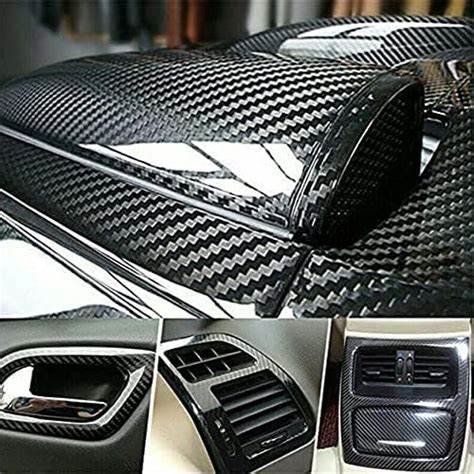
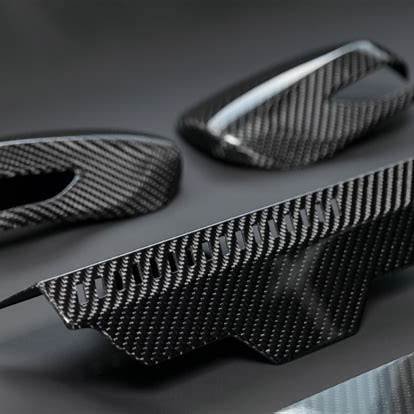
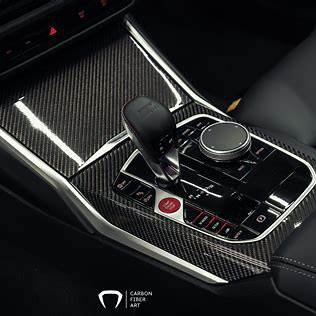
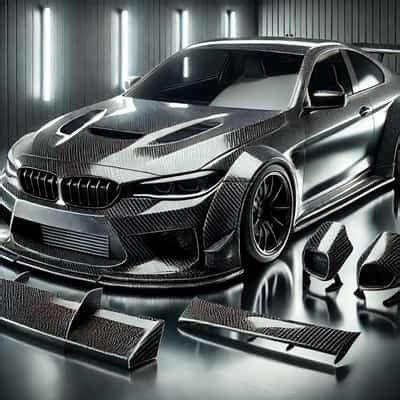
Carbon fiber is extremely strong, lightweight, and rigid. It has high stiffness and fatigue resistance. It is used in structural panels, car body parts, chassis components, drive shafts, bumpers, and interior trim elements. Carbon fiber helps reduce vehicle weight while maintaining strength and safety. It is widely used in performance and luxury vehicles to improve fuel efficiency and speed.
Composite Materials
Composite materials are made by combining fibers and resins to produce structures with improved strength, stiffness, and reduced weight. They are used in headliners, body panels, dashboards, bumpers, and reinforcement components. Composites offer a balance of strength, insulation, and design flexibility, contributing to comfort, aesthetics, and fuel efficiency in vehicles.
Nylon Fiber Sizes Used for Automotive Applications
Nylon fibers used in the automotive industry vary in size depending on the part and the required performance. The size of the fiber is usually measured in denier, which indicates the weight of the fiber per length, or by monofilament diameter.
Airbags
The fiber used is high tenacity nylon 6 or nylon 6.6. The typical yarn size ranges from 420 to 840 denier. These fibers provide high strength and controlled air permeability to ensure reliable inflation and resistance to tearing during deployment.
Seat Belts
The fiber used is high tenacity nylon 6.6 or sometimes polyester. The usual yarn size is between 1260 and 1680 denier. The fibers are strong and abrasion resistant to handle repeated use and heavy tension loads.
Upholstery and Interior Fabrics
The fiber used is textured nylon 6 or nylon 6.6 multifilament. The common yarn size ranges from 70 to 840 denier. These fibers provide flexibility, abrasion resistance, and an attractive finish suitable for seats and trims.
Synthetic Fiber Sizes Used for Automotive Applications
Automotive textiles are produced from various synthetic fibers chosen for their strength, durability, and resistance to environmental stress. The fiber size, usually measured in denier or filament diameter, depends on the application and required performance characteristics.
Nylon
Nylon is one of the most widely used fibers in the automotive industry. High tenacity nylon 6 and nylon 6.6 are commonly used for airbags, seat belts, tire cords, and braided protective sleeves. For airbags, yarn sizes range from about 420 to 840 denier. For seat belts, the yarn size is usually between 1260 and 1680 denier. Upholstery and interior fabrics use textured nylon fibers ranging from 70 to 840 denier, while carpets and floor mats typically use bulk continuous filament nylon 6 of about 1000 to 1500 denier. Braided sleeves and wire protection use nylon monofilaments with diameters between 8 and 15 mil, or approximately 0.2 to 0.4 millimeters.
Polyester
Polyester is used for seat upholstery, seat belts, headliners, and insulation materials. It provides excellent dimensional stability, colorfastness, and strength. High tenacity polyester used in seat belts generally ranges between 1000 and 1500 denier. Upholstery and seat fabrics use polyester fibers between 150 and 600 denier. Headliners and interior trims use lighter polyester fibers, typically between 50 and 200 denier, to maintain flexibility and softness. Polyester is also used in coated or reinforced fabrics such as truck covers and belts where the yarn size can reach 1000 to 2000 denier.
Rayon
Rayon fibers are used in tire reinforcement cords, hoses, and some interior fabric blends. They provide good strength, dimensional stability, and chemical resistance. Tire cord rayon fibers usually range between 1000 and 1650 denier, offering stability and elasticity under stress. In blended upholstery fabrics or linings, finer rayon fibers from about 100 to 300 denier are used to enhance comfort and flexibility.
Aramid
Aramid fibers, such as Kevlar and Nomex, are high performance materials known for their tensile strength, heat resistance, and excellent chemical stability. They are used in timing belts, drive belts, reinforced hoses, brake pads, and clutch facings. The typical yarn size for aramid used in belts and hoses ranges from 1000 to 1500 denier. For high stress applications like drive belts or tire reinforcement, yarn sizes up to 2000 denier are used. In friction materials and sealing components, aramid pulp or short fibers are employed for reinforcement rather than continuous filament yarns.
Carpets and Floor Mats
The fiber used is bulk continuous filament nylon 6. The yarn size is generally between 1000 and 1500 denier or roughly 10 to 20 tex. These fibers are durable, resilient, and resistant to wear and staining.
Braided Sleeving and Wire Protection
The fiber used is nylon 6.6 monofilament. The monofilament diameter typically ranges from 8 to 15 mil, which is about 0.2 to 0.4 millimeters. This type of fiber provides excellent abrasion resistance and flexibility to protect hoses and wiring.
Tire Cords
The fiber used is high tenacity nylon 6.6. The typical yarn size ranges from 840 to 1890 denier. These fibers offer high tensile strength, fatigue resistance, and dimensional stability for tire reinforcement.
Summary
Fine nylon fibers from about 70 to 420 denier are used in airbags interior fabrics and headliners. Medium fibers from about 400 to 1000 denier are used for airbags, upholstery, and some hoses. Medium fibers from about 840 to 1500 denier are used in upholstery, hoses, and carpets. High tenacity fibers from about 1000 to 2000 denier are used for seat belts, tire cords, and reinforced hoses. Coarse and high tenacity fibers from about 1680 to 1890 denier are used in seat belts and tire cords. Monofilament fibers from about 8 to 15 mil in diameter are used for braided sleeves and wiring protection. Durability: Highly resistant to cuts and surface abrasion. Expansion: Expands up to 150 percent for easy installation. Chemical Resistance: Resists gasoline, oils, and common automotive fluids. Environmental Resistance: Will not rot or retain moisture. Safety: Halogen free construction. Economical: Long-term cost savings through reduced maintenance and extended service life.
YYB Fibre Flock Fabrics
YYB fibre flock fabrics are available in natural, grey, and black colors, with custom colors and solutions also available to meet specific project requirements. The fabrics can be produced in custom sizes, and slitting services are offered for precise width adjustments.
These fabrics are characterized by their excellent wear resistance, soft sliding surface, and suitability for tight radius applications. They also have low fogging properties, making them ideal for automotive and industrial uses where durability and clean performance are required.
Here is your text rewritten in clear, professional English, with the order refined for logical flow and no symbols or special characters. It is suitable for brochures, technical reports, or product descriptions.
PP Staple Fibres for Automotive Applications
We produce high quality polypropylene staple fibres using advanced polymers, pigments, and performance enhancing additives combined with the latest colour technology. These fibres are designed and engineered to meet the demanding requirements of the global automotive industry.
PP staple fibres can be used both as substrate and surface materials to meet international automotive carpet standards. Since both layers are made from the same polymer type, the materials are easy to process and can be recycled together. This closed loop approach supports sustainability by reducing waste and contributing to environmentally responsible vehicle manufacturing.
Our fibres are supplied to major automotive brands worldwide and demonstrate exceptional performance in the following applications. Floor carpet systems Under shields Arch liners Acoustic insulation components Door frame coverings.